Restaurants: from order to table, with no blind spots
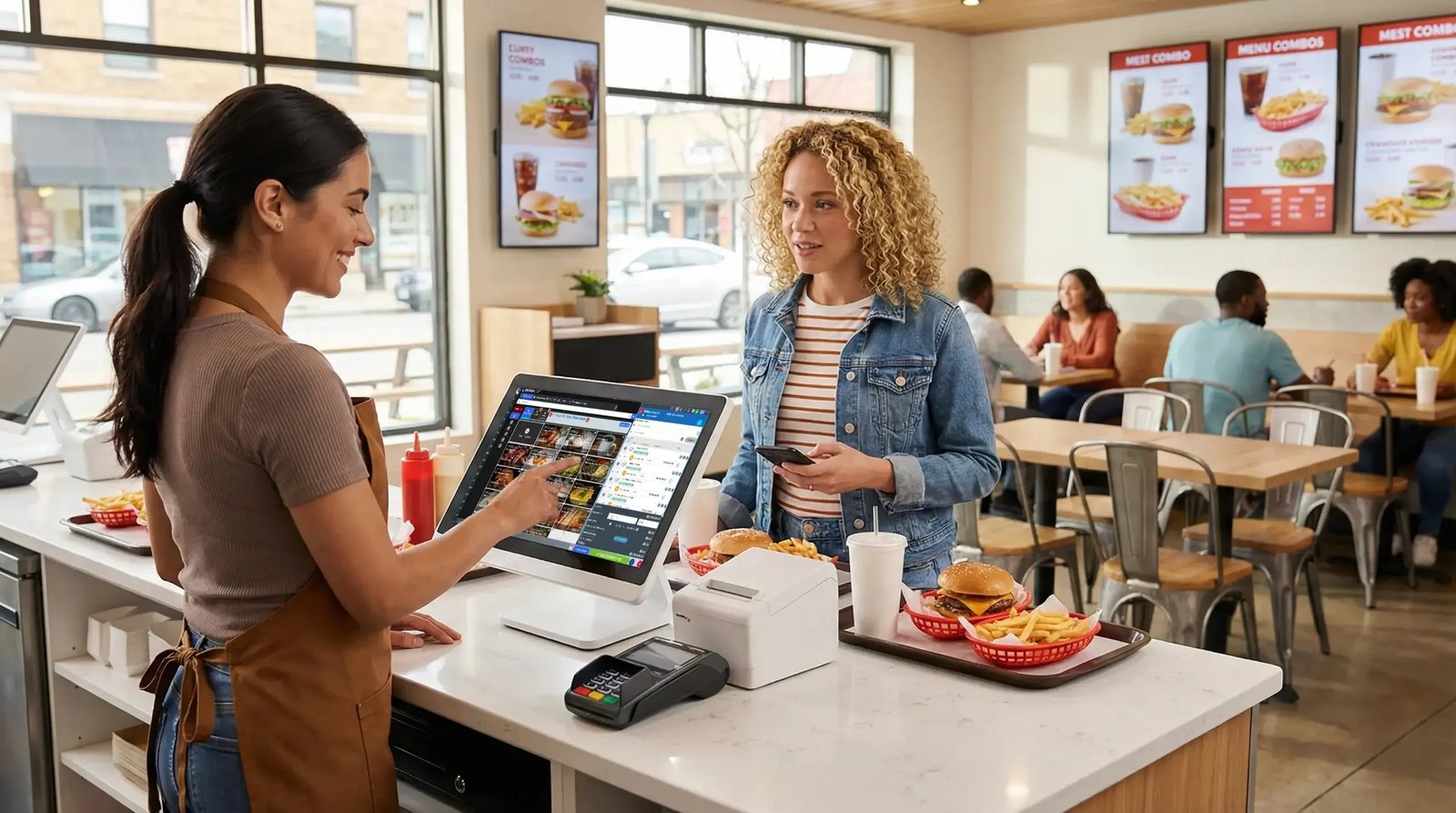
A restaurant chain can see every order, every register and every location while service is happening. Most still find out the next day, in the sales report.
At one of the chain’s busiest locations, several things happen at once:
- One of the registers starts declining card payments.
- The kitchen is two people short and orders pile up.
- Delivery orders go out late and some are cancelled.
- The walk-in cooler has been above temperature for an hour.
Each system recorded its part. No one saw the whole chain until the damage was done.
The problem
Each area sees its stretch. No one sees the whole order.
Sales, payments, orders, staff and utilities live in different systems. A register problem turns into incomplete orders, then waits and cancellations, and finally lost sales and margin. But that chain only shows up once the signals are connected.
Each area sees one part
Knowing a system works is not enough. What matters is whether the customer can buy and whether the order arrives.
The solution
A central nervous system for the whole chain
BzzzBX connects to what the chain already has, receives each signal once, gives it the context of location, process and impact, and responds in seconds. Three engines run on that core: Momentum follows each order’s journey, Metamap shows every location on an operations map and monsterMETER makes utility consumption and costs visible.
Receive, reason, respond
- POS and registers
- Payments
- Orders and delivery
- Staff and shifts
- Power, water and gas
- Receivesevery signal, once
- Reasonslocation, order, process and impact
- Respondsalerts, actions and memory
- Momentum: order journey
- Metamap: location map
- monsterMETER: costs
- Impact-ranked alerts
BzzzBX does not replace the POS or the ordering system: it connects to them and runs in the chain’s own cloud.
Metamap · locations that need attention now
Switch to backup register and alert the manager
Move one person from a nearby location
Shift plan stays
Illustrative values.
Cause and effect
The same failure, two different endings
- Payment failure
- Incomplete orders
- Waits and cancellations
- Lost sales and margin
- Failure detected in seconds
- Location manager alerted
- Backup register on
- Sales protected
The same goes for costs: a cooler working too hard or abnormal gas use shows up the same day, per location, before the bill arrives.
The business case
Three fronts of return
Return is measured with Bo11y, from the baselines of the first connected locations.
Lower cost per location
- Abnormal consumption spotted instantly
- Staffing matched to real demand
- Fewer manual reports
Utility cost per location
More completed orders
- Fewer cancellations and lost orders
- Registers and payments up at peak hour
- On-time deliveries
Completed orders · on-time deliveries
Fewer surprises
- Failures detected in seconds
- Cold chain watched
- Traceability per location
Incidents handled on time
The heaviest front is usually revenue: every order not lost is a sale. Adjust the assumptions:
Sales protected per year
Locations × orders recovered per day × 365 × average ticket
Figures are assumptions; the real case is calculated with each chain’s data.
How to start
Two locations first, then the whole network
- Pilot in 45 days. BzzzBX running in the chain’s cloud and the first two locations connected, with dashboards and alerts.
- Rollout. The same procedure extends to more locations and the engines switch on with real baselines.
- Full network. The chain adds locations at its own pace, with no new integration per location.
Business case built on typical restaurant-chain scenarios. Values are illustrative and are replaced with each chain’s own.