Mining: maintenance that gets ahead of failure and syncs the whole mine
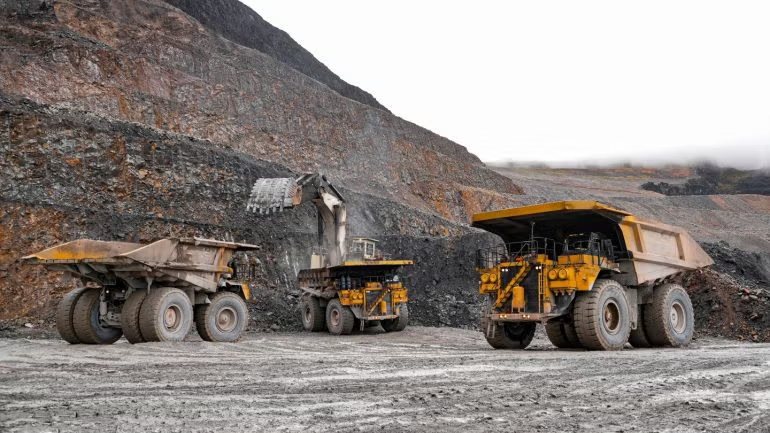
A mine can service every critical asset at exactly the right moment, with the part, the technician and the bay ready. Most still wait for the failure to decide for them.
A haul truck stops halfway up the ramp with 220 tonnes on board. Nobody knows why: every sensor, on its own, was within range. Temperature was rising slightly, pressure dropping slightly, fuel use creeping up slightly. No variable crossed its threshold; together they had been announcing the failure for weeks, but nobody was cross-checking them. What follows is familiar:
- The part is not in the warehouse: it arrives in four days.
- The specialist mechanic is on the afternoon shift.
- No bay is available: all of them are busy with calendar-based preventive maintenance.
- Production loses the truck without knowing when it will be back.
Nobody did anything wrong. Every area did its job with the information it had. The problem is that nobody was cross-checking that information.
The problem
The data exists. What is missing is seeing it together.
Temperature, pressure, vibration, oil analysis, operating hours, work orders, inventory, shifts and the mine plan: almost everything is already measured. But it lives in sensors, the dispatch system, the CMMS, the ERP, the lab and, sometimes, on paper or in the operator's voice.
As a result, every area decides on its own part of the truth.
Each area sees one part
Where there are no sensors, such as uninstrumented assets or manual records, the operation is blind.
A change of philosophy
From the calendar to the condition
Hour-meter programs service every 250 or 500 hours without knowing the real state of the asset. That creates two mistakes at once: healthy components are serviced too early, and fast-degrading ones too late.
Component condition vs. hour-meter services
Illustrative curve. With condition-based maintenance, the job is scheduled when the signal crosses the threshold, days ahead of the failure.
A failure should not decide when an asset stops. The mine should.
The solution
A central nervous system for the mine
BzzzBX connects to what the mine already has and follows a simple logic: it receives every signal once, reasons over it with business context and responds in seconds. Where the signal does not exist, it creates it: Eyesite covers blind spots in the field and Signal Maker turns inspections, voice reports and manual records into data.
Receive, reason, respond
- Plant: OPC-UA, MQTT, Modbus
- Telemetry and dispatch
- CMMS and work orders
- ERP: inventory and purchasing
- Oil analysis lab
- Eyesite and Signal Maker
- Receivesevery signal, only once
- Reasonsasset, component, process and impact
- Respondsalerts, workflows and auditable memory
- Prioritized alerts
- Work orders to the CMMS
- Machina: condition
- Metamap: mine view
- Auditable history
BzzzBX does not replace the CMMS or the ERP: it connects to them, adds context and triggers the workflows.
Statistical and predictive models across all variables at once. An isolated variable rarely crosses its threshold in time. BzzzBX applies statistical and predictive models that analyze temperature, pressure, vibration, oil, fuel, load and operating hours together, learn each asset's normal behavior and detect anomalous patterns even when no single signal looks out of range. That reveals the asset's real condition and lets the mine get ahead of the failure.
Multivariate analysis: what no single sensor sees
Illustrative curve. Each variable stays within its range, but the model detects that their combined behavior drifts from normal weeks before the failure.
With those signals, the degradation model correlates temperature, pressure, vibration, oil, load and operating hours to estimate each component's condition, risk and intervention window. The rigid calendar becomes a dynamic calendar, which the team runs from Machina:
Machina · condition of critical assets
Keeps producing this week
Scheduled with part and bay
No changes
Illustrative values.
The whole operation
When maintenance decides, the whole mine knows
The biggest value is not predicting the failure, but what happens next. Since every signal reaches the same core, every area sees the same intervention at the same time, days ahead:
One intervention, four areas in sync
- SupplyEngine kit reserved; the part in transit arrives Wednesday.
- PeopleTwo specialist mechanics assigned to shift A.
- WorkshopBay 3 and overhead crane reserved.
- ProductionShift plan adjusted: −1 truck, tonnage redistributed.
The work order reaches the CMMS the mine already uses, with full context.
In the workshop, a timeline per work order compares plan and actual at each stage. If something slips, the deviation and its cause are visible as they happen, not in the end-of-month report.
Work order · plan vs. actual
The parts delay is caught at the stage where it happens, and the bottleneck is recorded for the next intervention.
Cause and effect
Same wear, two different endings
The same wear can end in an unplanned stop or in a short, planned intervention. The difference is whether the mine sees it in time and whether every area acts on the same signal.
- Unseen wear
- Failure in operation
- Unplanned stop
- Part and technicians not ready
- Tonnes and margin lost
- Early signal
- Optimal window
- Part, technicians and bay ready
- Short, planned intervention
- Tonnes and margin protected
And the effect does not stay in maintenance: higher absenteeism among technicians stretches workshop time, a late part keeps a truck out of service, and both reduce tonnes moved, plant feed and mine plan compliance. BzzzBX makes that chain visible as it happens.
The business case
Three sources of return
Return is measured with Bo11y and validated with each mine's own data during the assessment.
Lower maintenance spend
- Fewer unneeded hour-meter services
- Fewer catastrophic failures
- Less overtime and fewer rush parts
- A single integration for the whole mine
Cost per operating hour · MTBF · cost per component
More tonnes
- Higher physical availability of fleet and plant
- Fewer unplanned stops
- Less time in the workshop
Physical availability · MTTR · tonnes moved
Fewer incidents
- Deviations detected in seconds
- Fewer failures in operation
- Audit-ready traceability
Equipment-failure incidents · critical events caught in time
Answer three questions about your fleet. Based on the results of our success cases, with Bo11y we estimate +3% availability and −6% in maintenance cost:
Your fleet with Bo11y
Availability85 % → 85.7 %
Maintenance cost−6 %
(availability × 1.03 − availability) × 8,760 h × trucks × tonnage × US$ 72 per tonne
Assumptions: Bo11y raises current availability by 3%, each additional tonne processed adds US$ 72, and maintenance costs US$ 1.2 M per truck per year. Maintenance savings are shown separately and are not added to profit. Reference figures; the real case is calculated with each operation's data during the assessment.
What Boss delivers
Three layers on top of what the mine already has
The solution connects mine, plant and people in a single living system, deployed in the mine's cloud or data center under its own security policies.
Maintenance is the entry point, not the limit. On the same core, the mine can extend observability to fuel, energy, safety, supply chain and costs with no new integration.
How to start
First, measure where the value is
We start with a short assessment, using the operation's own data:
- Sources and critical assets. Which signals already exist, and where instrumentation or connectivity is missing.
- Baseline. Current availability, MTBF, MTTR and maintenance cost.
- Bo11y case. We quantify the return of each source and define the implementation.
Business case built on typical mining scenarios. Values are illustrative and replaced with each operation's own data during the assessment.